Tuesday, 20 November 2012

佛光西照——佛恩迎客来


佛光西照——佛恩迎客来

前言

近年来,佛教团体如雨后春笋般地在西方各国出现,佛法正像春风般地吹拂着西方大地,早就想一探究竟;乘着佛客会议举办期间,我毅然于201286日启程前往美国,参加由89日至11日在美国科罗拉多州博尔德市举办的第二届佛客会议(Buddhist Geeks Conference)。

与上一个世纪50年代美国垮掉一代(Beat  Generation)的东行拜师修禅不同,西方人不再碍于传统佛教师承的拘束,年轻一代的美国禅修者,希望能够通过DIY(自己动手)的方式将佛教与科技相结合,开始西方新型的禅修之路。

随着传播载体的科技化、网络化及多元化,西方佛教徒在参禅时自己动手摸索出一套自己修行的独特方式,他们这种把佛教与科技相结合起来的人自称为Buddhist Geeks,我翻译为“佛客”,这一次会议就是由一群佛客所主办。

佛客们通过播客(Podcast)、线上杂志及年会来为西方佛教徒传道、授业与修行解惑。博客的意思是通过苹果的iPod来传播(broadcast),第一代的iPod20011023日发布,其容量只有5GB,至今已有十一年的历史。20099月苹果发表了新的iPod classic,容量已达到160GB

这种通过使用最新的通讯及科技的手段来实践和传播佛教,其形式虽然显得有点非传统、非正式,但却最符合美国人活泼、无拘束的自由性格。我在佛客会议场中认识到的美国佛客就有数位是通过博客而进入禅堂,最终成为比我还要虔诚的佛教徒。

佛客的创始人之一文森特﹒合恩(Vincent Horn)毕业于美国佛教那洛巴大学Naropa University,主修宗教研究。见图一。合恩发觉佛教在美国很少见诸于各种媒体,为了要弥补这一个“佛只度有缘人”的缺憾,他在1997年与瑞安﹒奥尔基(Ryan Oelke)创立了佛客(Buddhist Geeks),6个月之后格温﹒贝尔(Gwen Bell)也加入,但一年之后贝尔离开,今年,由罗汉Rohan Gunatillake所发起的“佛化”buddhify组织开始加入,使佛客的传播更显给力。


图一:右一为舒亚﹒达斯喇嘛,右二为文森特﹒合恩,中间为林明雅,左一为罗汉,左二为凯斯

截至目前为止,佛客通过播客的下载量已超过百万,上载了超过数百剧集,内容包括佛教和现代科学、 神经科学、博弈等的探索,形式包括面谈、 佛学讲座与其他感兴趣的话题录制,并邀请各界著名学者来讲演。

2006年佛客正式在加州圣莫尼卡市(Santa Monica)成立,2011729日至731日,佛客以“发现佛教的横空出世” Discover the Emerging Face of Buddhism)为主题在美国佛教西来大学首次召开会议,有来自北美、法国、阿根廷及加拿大的佛客参加了会议。今年是第二届,人数已经超过220人,主要还是以美洲与欧洲佛教徒为主,来自亚洲的有日本的岛津明Aki Shimazu,见图二。而我是唯一正式报名参加的华人。


图二。作者与唯法禅师(右一),岛津明居士及Hae Won Sunim法师合影于休息间。


参访丹佛禅修中心

由于8月前往美国的直航班机早被旅客订光,我是经过数次转机,花了足足32个小时的旅途奔波,才于86日当地时间晚上7时抵达博尔德市,下榻于博尔德客栈Boulder Inn

来美之前,我通过佛客会议其中一名参与者杰森﹒米格Jason Mieger的介绍,与丹佛禅修中心有约,隔天我依约拜访了丹佛禅修中心Zen Center of Denver,见图二。接待我的是卡琳Karin Kempe禅师。


图二:丹佛禅修中心之一


图二:丹佛禅修中心之二


图二:丹佛禅修中心外观,摄于1935年。

丹佛禅修中心传承于日本禅师安谷白云Hakuun Ryoko Yasutani1885 1973)。安谷白云,出生于日本静冈县,13岁时于曹洞宗寺院出家,法名量衡。15岁开始学习坐禅,40岁之后正式成为寺僧,后得原田(大云)祖岳Daiun Sogaku Harada 1870-1961 )印可,承其法嗣。其教授法兼备曹洞宗道元禅师之禅法心要“只管打坐”,及临济宗之法要“公案与坐禅”。 

由于有感于当时曹洞宗的教学形式相当形式主义,安谷白云觉得其缺少现实意义。于是他主动脱离曹洞宗,于1954年创立三宝教团Sanbo Kyodan,着重训练在家居士,并在196270多岁高龄时前往美国。经其美国弟子菲利浦﹒卡普乐Philip Kapleau1912-2004)写的《禅宗三柱》一书介绍了安谷白云和《参禅入门法》坐禅的方法,使安谷在美国名声大噪。

由于日本三宝教团的修行是综合临济宗和曹洞宗的方法,即以赵州禅师语录为主,注重参“无”字公案,采用打坐、行香、讨论、问答等比较适合欧美人士的口味的方式,使欧美人士加入者众多,成为有一定影响力的僧团。

后经原田与安谷的两位美国学生菲利浦﹒卡普乐和罗伯特 艾特肯Robert Aitken 把此修行法门带到美国、 加拿大、 墨西哥、 南美、 欧洲、 澳大利亚和新西兰来。再加上菲利普的继承人大南亨利 Danan Henry,他们三人于 2010 9 12 日在丹佛市成立现在的丹佛禅修中心。

原来安谷白云是日本大东亚共荣圈政策的积极支持者,他反对民主体制,支持皇权独裁和军国主义,他还同时具有强烈的反犹思想。迟至2000年,三宝教团才就安谷白云在太平洋战争期间的不当言论发表了一份道歉申明。

有意思的是,卡琳禅师就是一名犹太裔的佛教徒(JU-BU),由于美国犹太裔的佛教徒日益增多,JU-BU已经成为美国特有的一个族群,这一次佛客会议的其中一名讲演者就是来自犹太裔的舒雅﹒达斯喇嘛Lama Surya Das。在交谈中,我好奇地直接请教卡琳禅师,目前西方主要的宗教信仰如天主教,基督新教,东正教,圣公会甚至是伊斯兰教,其经典主要均来源自希伯来人的圣经《塔纳赫》,作为耶和华神唯一甄选的选民犹太人,为何会日益增多地皈依佛教呢?

她以自己为例,说犹太人信仰自己的族神已有数千年的历史,却并没有给犹太人带来和平与安详,反之却是无穷尽的战争与杀戮,当卡琳接触到佛教的平等、慈悲与安详时,使她觉得那是她要追求的信仰。

之后卡琳禅师带领我参观与介绍了她们的禅修中心,此禅修中心原为科罗拉多第四基督教堂,建立于1921年,由于越来越多的美国人已经不上教堂,所以目前把它改为禅堂,像这一类把教堂改为禅修中心的事在美国各地已经是屡见不鲜。

学员很多都是丹佛附近的居民,他们主要过去是信仰基督教与天主教,接着她似乎有所遗憾地说:“就是还没有伊斯兰教徒的居民走进来。”

提及2012720日发生在美国造成十多人死亡,数十人受伤的丹佛戏院枪杀事件,卡琳禅师说丹佛禅修中心曾三度为往生者超度诵经,并获得当地居民的接受。

我们交谈了约一个小时,临走前我要求与卡琳禅师合影,她欣然答应,并特别隆重地去穿了一袭日式禅宗僧袍出来与我合影。见图三。美国很多出家人平时穿着与俗家人一样的衣服,也不剃发,我在接着下来的三天佛客会议中得到更多的引证。


图三:作者与卡琳禅师合影


参访美国那洛巴大学Naropa University

88日一早,我骑上了客栈的脚踏车,直奔由西藏流亡喇嘛丘扬创巴仁波切(1940-1987)所创立的那洛巴大学。丘扬创巴出生于西藏东部,持有噶举及宁玛两派的传承。公元1958年,他由西藏逃亡至印度后就开始喝酒,之后加入达兰萨拉的西藏流亡政府。1962年,与昆秋巴登 Kunchok 女士生下长子萨姜米庞仁波切。

1963年丘扬创巴前往英国牛津大学深造,1967年在苏格兰创立了第一所藏传佛法静坐中心桑耶寺林。19695月因酒后驾车发生车祸,导致终身左半身麻痹;在治疗期间,丘扬创巴决定还俗,并向其女弟子黛安娜•派碧斯Diana Judith Mukpo求婚。1970年完婚后前往美国科罗拉多大学教授佛法。

四年后,丘扬创巴在科罗拉多州建立那洛巴学院Naropa Institute,也就是博尔德市那洛巴大学的前身。19874月,创巴仁波切在加拿大新斯科夏省辞世,享年48岁。19955月,其弘法事业开始转由他的长子米庞仁波切统理。

我在那洛巴大学认识了芭芭拉教授,见图四。我向她请教为何现代东方人热衷于西方的宗教而西方人却向往于禅宗的修行。她说可能是由于全球化的原因,使东西方文明通过现代资讯的便利而形成一个交汇;而西方脑神经科学以及科技的发达使心灵的修行更趋向科学化、科技化、现代化、自由化、可量化与可实现化,驱使西方人士对禅修趋之若鹜。


图四:作者与芭芭拉教授摄于那洛巴大学图书馆内一角。

我说西方“他者”文化思维的根源,在于其信仰的排他性与自我优越性,故而产生了亨廷顿的文明冲突论;然而,佛教首先认为万物是相互依赖而生,既然万物是相互依赖而生,就此产生了因缘和合的文化思想,断除滋生“他者”文化的土壤。进而认为和合的有情人生悉皆是苦,有漏皆苦,只有自我内化的修行,以求人生的解脱,人类才能解放,是为“知苦、断集、慕灭、修道”。

依我近年来的观察,佛教目前对西方社会的影响显然与文明冲突论的看法很不一样。有学者提出文明对话来取代文明冲突论,而对话必须要有共同的语言,假如各说各话,如儒家说仁爱,西方说神的爱,再把“爱”抽象化,并提高到所谓的“普世价值”观来吓唬世人,这种对话实在难有交集之处。

与之不同的是,由于佛家认知人生是苦,故而提出与乐拔苦的慈悲观,此思想就建立在此(爱)心非(爱)心得慈悲观点上,慈悲一语就把抽象化的“爱”给道破。有了这种知苦寻乐的内化共识,东西方文明才能有对话的基础,避免各说各话,毫无交集。因此,佛教在现代世界文化交流与对促进世界和谐的贡献,应该可以扮演更积极的角色,她也同意我的看法,并很开心我们之间的对话。

之后我们交换礼物,她说大学愿意发奖学金给那些愿意到那洛巴大学读研的出家人,希望有更多的汉传僧人来交流与深造。最后她带我参观该大学的图书馆,并见了该大学的本科与研究院的两位漂亮的注册主任,见图五。了解了该大学的入学要求与课程。
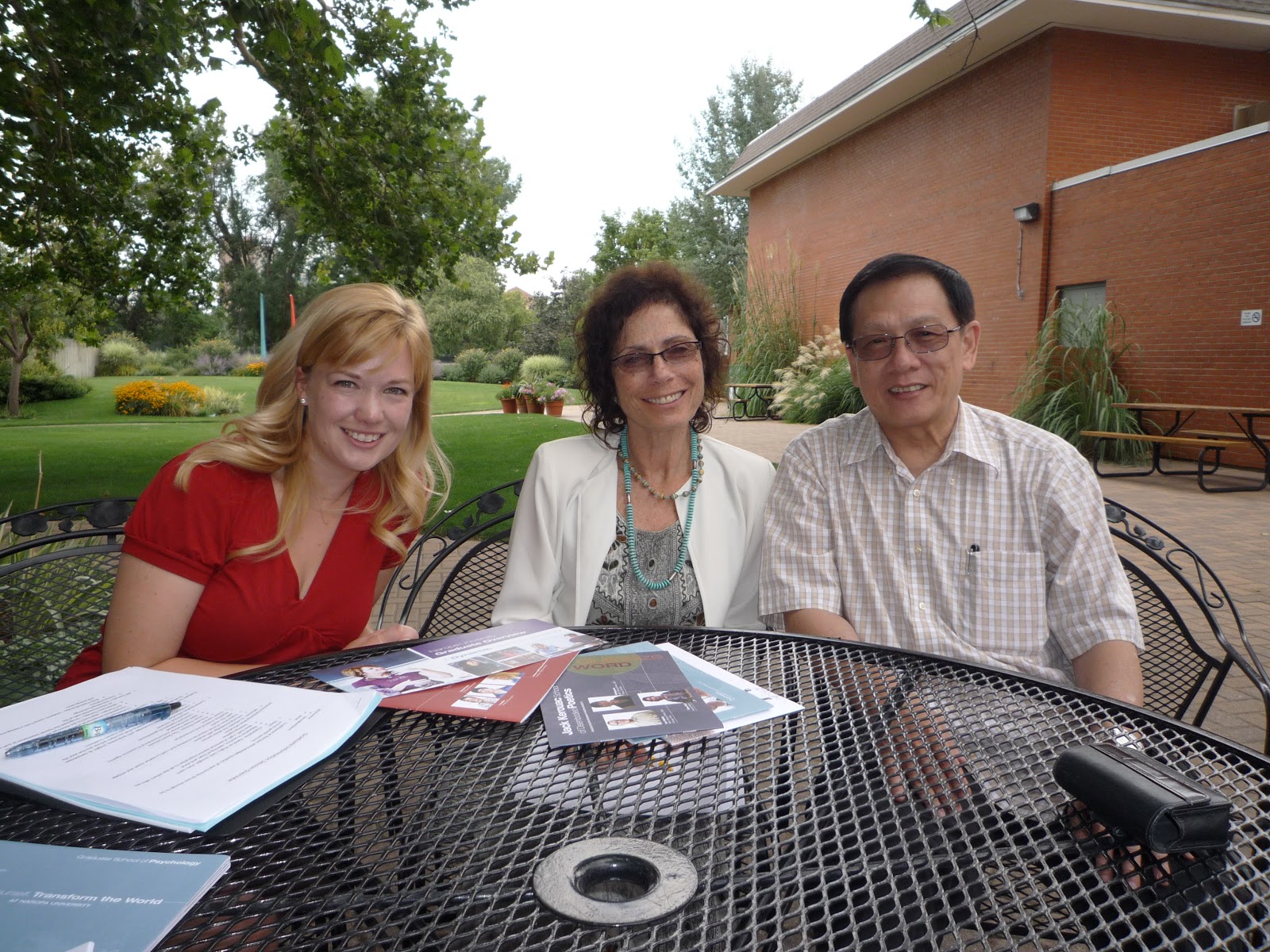


图五:作者与那洛巴大学研究院注册主任凯莉(左一)及本科生注册主任艾丽克森合影。

在游览大学校园时,负责接待介绍的女士在介绍丘扬创巴仁波切如何离开西藏时是以中国侵略(invade)西藏作为开始;经我的即时更正,说明西藏是中国领土的一部分,连达赖喇嘛都不否定,何来侵略,我的说法获得同行的另一位美国学生的附和,该女士同意以后会注意这种太政治化的介绍。这让我感到藏传佛教徒到西方传法的同时,也带去他们对政治的见解,却不跟西方说明他们为何要离开中国的事实真相。

佛客会议

佛客会议由89日至11日共三天,一早出房门就巧遇一对住在同一酒店的罗伯特﹒奥斯汀Robert  Austin夫妇,他们俩来自美国与加拿大接壤海湾的一个小岛上,接下来的三天,我便与他夫妇一起共乘出租车上会议中心。会议中心坐落在美国博尔德市的科罗拉多大学,佛客会议就在该大学的纪念堂举行。见图六。


图六:科罗拉多大学纪念堂会议一角,手上拿着书本的就是奥斯汀及其右手边的夫人安琪。

会议的安排非常活泼和紧凑,如一早就有由苏菲亚Sofia Diaz及法海法师Hokai Sobol主持的公开的静坐学习,苏菲亚最初学习舞蹈,毕业于科罗拉多大学宗教研究院,后到印度与西藏学习哈达瑜伽和密宗的静坐,具有30多年的教导静坐的经验。法海法师师承日本真言宗,具有多年教导静坐的经验。另外辟有一间课室让参加者静坐。

除此之外,还有讲座、分组讨论、座谈及提问的系列。受邀的讲演者有21人,当中有犹太裔喇嘛,赛博格人类学家,作家,老师,公司总裁,社会活动家,瑜伽师,教导佛法与静坐的老师,大学教授,科学家,哲学家等,无法一一列举。

下午四时注册并开始第一天的会议议程,首先是佛客创办人合恩致欢迎词,接着是舒亚﹒达斯喇嘛Lama Surya Das,他的讲题为“佛教的未来”,其中提到哈佛大学脑神经科学家吉尔﹒泰勒教授Jill Bolt Taylor的研究,对佛教的未来会产生重大的影响。

舒亚﹒达斯喇嘛也是犹太裔,他出生于1950年的纽约,是西方佛教的禅定上师和著名学者之一。他在纽约州立大学读书时曾经参加过反越战的抗议游行,1972年,他以优异的成绩毕业。

1971年到1976年之间,他在印度和尼泊尔向不同的精神上师学习,Surya Das这个名字就是他的印度教上师给的,意思是“光之仆人”。这期间的1973/74年,他曾到日本安泰寺向日本曹洞宗内山兴正禅师Kosho Uchiyama 1912-1998)学习。

1980年,舒雅﹒达斯喇嘛在法国宁玛巴闭关中心进行长达三年半的传统闭关修行,最后在1984年正式成为藏传佛教传承的喇嘛。之后的近三十年的里,他精进学习内观、瑜伽,以及藏传佛教的教法。在美国各地创建了“大圆满”基金会Dzogchen Foundation和修行中心,并经常在世界各地说法、演讲、带领禅修闭关和研讨会的活动,著作甚多,近作有《佛性的游戏》(Awakening the Buddhist Heart)。

第二天上午的第三位讲者是威洛比﹒布里登Willoughby Britton教授,布里登教授是一名研究冥想的神经科学家;对于佛法与科技的关系,她认为冥想的科学研究无疑是佛法有力传播的背后力量之一,科技的研究提供了很多"佛法技术"的希望与承诺。然而,布里顿提醒大家,在我们可以利用科学的全部力量之前,仍然存在着重大的挑战。

布里登Willoughby Britton教授还告诉观众,快乐的获得并不在于欲望的满足。她讨论了我们的心理素质作为我们练习的习惯,她揭示了神经科学和静坐之间的重要联系。她的研究是获得美国国立卫生研究院NIH5年资助,专门研究正念冥想的脑神经生理学,包括抑郁症, 情感、 睡眠、 脑电图 + 内分泌运作、睡眠 + 情绪和不良或医源性的潜在影响等。

第二天晚上的第一位讲者安博﹒凯斯Amber Case,她是一名赛博格人类学家,赛博格是英文cyborg的音译。 这词出自1960年的美国航天医学空军学校的两位学者克莱恩斯Manfred E. Clynes与克林Nathan S. Klin,他们为了解决未来人类在星际旅行中所面临的问题,第一次提出Cyborg这个概念。

由于人类肌体的脆弱性,无法承受住上百光年距离的高速旅行,为了克服人类生理机能的不足,两位学者提出可以向人类身体移植辅助性的神经控制装置,以增强人类适应外部空间的生存能力。Cyborg这个词就有神经的意思。

凯斯的讲题是静坐与现代赛博格Meditation and the Modern Cyborg,她预测,强化人类与科技之间的接合将能迅速减少个人与社会之间的距离,她认为,这种结合将会为人类带来前所未有的快速学习和沟通。

人类由于会使用工具而超越了类猿人,使人类这一物种可以独霸地球上的所有物种,却也同时与大自然渐行渐远;可以预测,进入21世纪,人类在越来越依赖电子工具的使用,将会帮助人类再一次地超越自身,其不同之处在于这一次的超越将会着重在心智层面上面的超越。

凯斯年轻时有失眠的现象,促使她着力于研究人脑如何可以如电脑般地用手把它关掉。这一研究的设想与泰勒教授的中风使左脑受损导致有被“关掉”的效果一样,而左脑正是掌管人类线性思维的重要器官,也是导致人类产生逻辑理性而远离道德悟性的重要原因。

当泰勒的左脑由于中风而被“关掉”之后,其右脑的运行使这一著名脑科学家感到其身体与周围物体分子产生相互结合,进而获得类似“涅槃”的境界。佛教静坐的止息就有“关掉”的直接效果。

其他的讲演者还有罗汉Rohan Gunatillake ,他是“佛化”buddhify网站的创始人,这是一个通过科技将思路设计与冥想相结合的网站。他是第一个将手机或电脑软件的应用程序使用于静坐的人,他的讲题就是“修行、游戏、正果”。他认为把修行寓于游戏之中,将新型科技与静坐的结合是能够吸引更多的人来参与,有助于冥想的修行以达正果。

还有的是史蒂芬﹒巴彻勒Stephen Batchelor夫妇,1974年史蒂芬﹒巴彻勒Stephen Batchelor曾到印度的达兰萨拉Dharamsala出家成为格鲁派的小沙弥,后与1974年在韩国松广寺出家的法国女子Martine Fages认识,二人于1985年还俗并在香港结为夫妇。2000年移居法国,继续弘扬佛法。

除此之外,还有美国著名佛学研究学者戴维罗伊David Loy,著名佛教活动家斯通Michael Stone等,无法一一赘述,有兴趣的读者可以上Buddhist Geeks网站浏览。

分组讨论

分组讨论的题目是由参与者自己提出,贴在布告栏上,提出题目的人自然也成为组长,然后由组长带领组员到各自的教室去,组长扮演的角色只是领头人,不是讲演者,西方人对于这一类的活动的参与很积极。我参与了其中一组有关静坐与科技的一个小组,组员大多谈及自己在静坐时的心得,其中奥斯汀把他们研究开发脑状态调节仪的产品向组员介绍。

美国科学家的脑科学实验在近20多年有重大的发展,奥斯汀运用近五十年来脑科学对于人脑与“多重闪光触发频率”研究所发现的“脑波视觉效应”技术,结合近代声学最伟大的 “生物窗频音”(Windows Frequencies)研制而成现在的脑状态调节仪器。

该仪器透过特殊的闪光眼罩与耳机,传递声、光多重频率组合等讯号,快速地与脑波产生共振,直接促使引导脑细胞活动效能(NEQ)达到最佳的状态。而引导脑波产生同步状态是一项非常关键的科技,它能够迅速诱导出α、β、θ、δ脑波,从而使人快速地集中专注力,可以让大脑迅速达到所需要的最佳状态,使一些无法进入安静状态的禅修初学者能够很快地进入状态。

该项研究也发现,该仪器也同时能够提升记忆力、减压调节、深度放松、恢复精力、改善睡眠等。这种能够量化静坐的研究,是能扫除静坐的迷信与神秘性,更能吸引西方人士。

我在发言时提出佛陀是天人导师,佛陀的修行之路是漫长且有效,是值得后学者借鉴,西方的科技的发明与发现无疑可以值得东方修行者去了解与学习,不需要马上去质疑。

该组的一些组员一听说要作累世的修行显得很惊讶,其中有一女子听我说完之后接着答道“那将要花费太多的时间”,说完起身就走;我的发言显然不适合美国快餐式的文化,小组讨论时间刚好也就此结束。过后我再向奥斯汀作进一步请教,他回家之后从美国寄来一套其产品让我向有意禅修的初学者作推荐。

三藩市的佛教中心

第三天午餐时间,在大学的餐厅用餐时,有一名来自美国西部加州的参加者向我走来,他自我介绍说他已经皈依佛教,有一个法号叫唯法Viradhamma,同时告诉我说昨天我在小组讨论时有关佛陀的修行经历的发言很精彩,我说我没有在该小组里见过他,唯法说是其他有参与的小组成员告诉他的,此事已经传遍整个会场。

唯法说由于见到我在佛客会议网站的自我介绍文字后,一直很想认识我。在交谈中,唯法告诉我说他的祖父是传教士,二战前曾到中国去传教,父亲在中国出世,也是传教士,可是祖父不给他的父亲学习中文,担心他父亲受到中华文化的影响,中国解放后他的祖父与父亲俩也就回到美国来。

我笑说司徒雷登的父亲也是到中国传教的传教士,可司徒雷登却学会了一口浙江口音的汉语,最后成为中国解放前最后一名美国驻中国大使,他听后微微地一笑。

 最后我提出要到三藩市去拜访他的道场,他一口答应,我马上更改我的行程,于会议结束后的第二天坐了两个小时的飞机飞往三藩市。

第二天清晨六时三十分,离开博尔德市之前,合恩与罗汉俩一起到我下榻处与我一起吃早餐、会谈与送别,并约定将来交往的内容,希望通过佛教能促进东西方文化的进一步交流。

下午抵达三藩市市区,唯法带我去参观他的道场,这是一间坐落于三藩市教会区Mission District三层楼的旧建筑物。见图六。禅堂设于楼下,免费开放给附近居民前来坐禅静修,还有自助式的佛教书籍贩卖部,接待室等;二楼是课室,三楼是卧室。

  
图六:与唯法禅师摄于三藩市佛教中心门前

三藩市佛教中心的前身是西方佛教会之友(Friends of the Western Buddhist Order,缩写为FWBO),由英国人僧护Sangharakshita1967年创立。唯法自1980年来就在三宝会参禅,1994年到印度出家,他在三藩市佛教中心教导佛学与禅修及为有意皈依佛教的人进行皈依礼。

唯法每年都带领美国人到印度走访佛陀的遗址与参禅,2007年曾带领数百美国 人一起皈依佛教,他也是北美地区三宝国际理事会理事,负责协调世界各地的三宝活动。并定期访问印度以支持教育、 社会及三宝会的计划。他的出家虽然不能获得其家族的理解,他依然朝向漫漫的修行之路前行,他在接待我之后的第二天一早就前往闭关静修10余天。

总结

总结此次美国的行程,不单让我有机会近距离接触到当今美国的佛教现状,也结交了很多美国的佛客,这里无法一一介绍,收获甚丰。

过去东方尤其是中国的物质与精神文明曾引领世界千余年,但近两百年来却落后于西方;假如我们的精神文明再重韬覆辙,不求进取,很快地将如物质文明那样,会被西方赶上。届时,当经济发展到了瓶颈的那一天,需要依赖创意经济来驱动经济的进一步发展时,却失去创新的原动力,必将会产生社会的各种危机。

美国人过去半个世纪到东方参禅出现了无数的杰出人才,其中就有具创新智慧的乔布斯Steve Jobs,他也和我这一次见到的美国出家人一样,蓄发、娶妻、参禅、入世过世俗的生活,把生活佛化。其名言就是:“求慧若渴,大智若愚”(Stay Hungry, Stay Foolish)。

在《史蒂夫﹒乔布斯传》第44页里,作者沃尔特﹒艾萨克森曾引述乔布斯的话说:“禅对我的生活一直有很深的影响。”其原因就是:“如果你坐下来静静观察,你会发现自己的心灵有多焦躁。如果你想平静下来,那情况只会更糟,但是时间久了之后总会平静下来,心里就会有空间让你聆听更加微妙的东西——这时候你的直觉就开始发展,你看事情会更加透彻,也更能感受现实的环境。你的心灵逐渐平静下来,你的视界会极大地延伸。你能看到之前看不到的东西。这是一种修行,你必须不断练习。”

乔布斯能一而再地看到人们先前看不到的东西,并看得透彻,使视界极大地延伸,为疲惫的美国经济注入强针,使苹果产品的一再创新,屡创佳绩,不能不说得益于此。

美国人正朝着乔布斯的脚步加快前进,他们正通过如奥斯汀的静坐器材、布里登教授和泰勒教授等一群杰出脑神经科学家的科学研究、美国各著名大学自发地的开展各类佛学教育门科、无数的卡琳禅师与唯法禅师的身体力行、无数类似罗汉的“佛化”网络以及合恩的佛客会议推广,我预感,美传佛教正冉冉地在西方升起,为中西方文明的真正有效对话搭起一座实质的沟通桥梁,为世界的真正和谐做出贡献,我们没有理由再等待。


Monday, 19 November 2012

Enlightenment: Is Science Ready to Take it Seriously?


Enlightenment: Is Science Ready to Take it Seriously?

By Jeff Warren  November 2012 - Issue 3


I’m not given to making grand predictions, but in this case I can’t resist: the very real spiritual transformation at the heart of mysticism is about to explode into the secular mainstream, and the consequences may just revolutionize our scientific understanding of the mind.

Yowzer! No doubt the reader’s New Age flapdoodle-detector is now shrieking. Bear with me. Let’s first get the tricky business of defining enlightenment out of the way.

For expediency’s sake, I’ll define enlightenment as a complex and multi-faceted process by which the mind comes to know – and over time rest more securely in – its own ground. As this happens, our habitual sense of being a separate and bounded self begins to fade. Ultimately, the person for whom this happens no longer feels themselves to be an autonomous entity looking out at an external world; rather, they feel themselves, more and more, to be an intimate part of that world’s humid expression, an unfolding natural process no different than anything else in nature. As a result, practitioners report a liberating sense of freedom, ease, spontaneity. The volume of self-referential thought often decreases, although, since enlightenment happens along a deepening continuum, they are still routinely trapped in old habits of dualistic thinking.

Despite the fact that this transformation has been painstakingly described in virtually every contemplative tradition – from Buddhism, Taoism and Hinduism through to the mystical branches of the Western Abrahamic religions – and is the central drama in the lives of thousands of lucid and intelligent human beings, here in the West there is zero mention of the phenomenon in any of our bastions of intellectual respectability. You’ll never read about spiritual enlightenment in a Malcolm Gladwell book, or the pages of The New York Review of Books. This is true even in most Western Buddhist books, where enlightenment may be mentioned as a general principle or orientation, but almost never as a tangible transformation that happens to real 21st-century human beings.

The reason for this probably has to do with accessibility. The first American Buddhist teachers, most of them operating out of the Insight Meditation Society (Joseph Goldstein, Sharon Salzberg, Jack Kornfield and others), acted as skillfully as possible to bring the benefits of meditation to a large secular audience. Given how skittish Western intellectuals are around religious themes, the last thing you’d want to do here is start raving on about mystical oneness. There is also a lively debate in the spiritual world about the advisability of even mentioning different states and stages. On the upside it can help orient practitioners within often strange and difficult experiences; on the downside it can burden them with unrealistic expectations of “progress” that end up getting in the way. Compounding this, there are whole schools of contemplative thinking who argue that all of us are already enlightened; we have no where to go and nothing to do.

The majority of old-guard U.S. Buddhist teachers erred on the side of caution; as a consequence most of their books are filled with sensible soft-dharma insights gently shaped to fit our general Western model of psychotherapy. There are exceptions, and those exceptions, I’d like to argue, are about to become the new rule.

There is a new spirit of openness, for instance, in both the culture of spirituality and the culture of science.  One spiritual Trojan horse is yoga. Another is the increasingly popular practice of “mindfulness.” Both of these are powerful spiritual technologies. Most people approach them for practical fitness or stress-reduction reasons, and this is all they ever deliver on. But, for a small percentage, something else happens. They find themselves – deliciously, inexorably, sometimes alarmingly – moving along a course of spiritual development they never expected.

I teach mindfulness meditation, so I have a particular interest here. Mindfulness is the practice of bringing clarity and concentration and equanimity to our moment-by-moment experience. Doctors chirp happily about its secular benefits even as the terrifying specter of loving mystical connectedness pours from the belly of the horse. You can thank Jon Kabat-Zinn for this. His pioneering Mindfulness Based Stress Reduction model is everywhere – over 120 medical centers in the US alone offer mindfulness programs, and there has been a commensurate scientific interest in the subject – official NIH-funded studies on mindfulness have gone from two in the year 2000 to 128 in 2010. Mindfulness in small doses is an immensely helpful way to address stress and anxiety and pain and all kinds of other conditions. Mindfulness in large doses is called vipassana; it rewires the brain and extirpates the sense of a separate self. Come for the raisin, stay for the perspective-shuddering cosmic U-turn. What starts subtle can grow, and, as the brilliant Buddhist teacher Shinzen Young says, “subtle is significant.”

In the multidisciplinary world of consciousness studies, the buzzword is nonduality, a translation of Advaita (literally “not two”), an ancient branch of Hindu philosophy. I’ve presented at two ‘Toward a Science of Consciousness’ meetings, a terrific annual assembly of the biggest names in neuroscience and philosophy of mind, among them Antonio Damasio, David Chalmers, Wolf Singer, Susan Greenfield, Stuart Hameroff and others. For the past few years nonduality has been a popular subject of discussion. There is even a dedicated ‘Science and Nonduality’ conference - now in its fourth year – that features some of the same speakers, many of them offering straight-to-the-bone “Direct Path” instruction in books and DVDs and weekend workshops.

The Internet is the great culprit in all of this. Where once you had to climb a mountain in Tibet to get answers to spiritual questions, you can now find them on Wikipedia, or an easily-arranged Skype call. Enlightenment is the Internet subject par excellence – vague, contradictory, fiercely blogged about by ill-credentialed authorities. It’s no small irony that the very medium that is hopelessly fragmenting human attention is simultaneously offering up some of the necessary tools to heal us – that is, if you can separate the wheat from the chaff.

Within American Buddhism, the heart of this new transparency calls itself “Pragmatic Dharma.” The influential Buddhist Geeks podcast and conference is at the center of it. For the past few years, in popular interviews with dozens of scientists and teachers, they talk openly about different aspects of the awakening process, including frank testimonials of their own enlightenment experiences. This is a culture of learning and experimenting and exploring together. The Geeks believe – as do I – that the reticence and secrecy around spiritual transformation is no longer helpful or productive.

How do we know that all of these self-described enlightened practitioners and teachers aren’t bullshitting us? We don’t. And we won’t until we find some identifying neural signature in the brain, if such a signature even exists. I know several neuroscientists working on this question right now.

In my own case, I have stopped quibbling. People I’ve known for years tell me about their enlightenment experiences and I believe them. I believe them because my curiosity about what may be happening in the mind is greater than my allegiance to an outdated and uninformed scientific consensus. Western psychology is still outgrowing a reactive skepticism towards the subjective anecdote that it inherited from behaviorism. Fortunately, this is changing. These days, there is a growing appreciation among investigators that if you want to understand consciousness – as opposed to just brain activity – you have to start taking first-person reports seriously. This will soon include reports of enlightenment.

Science changes. That’s what it’s supposed to do. How it stands to change from enlightenment is something I’ll address in my next column.


Saturday, 10 November 2012

Why the Buddha Touched the Earth


Why the Buddha Touched the Earth

by John Stanley & David Loy

ETM.jpg


The entire cosmos is a cooperative. The sun, the moon, and the stars live together as a cooperative. The same is true for humans and animals, trees, and the Earth. When we realize that the world is a mutual, interdependent, cooperative enterprise -- then we can build a noble environment. If our lives are not based on this truth, then we shall perish. --Buddhadasa Bhikkhu

The term 'engaged Buddhism' was created to restore the true meaning of Buddhism. Engaged Buddhism is simply Buddhism applied in our daily lives. If it's not engaged, it can't be called Buddhism. Buddhist practice takes place not only in monasteries, meditation halls and Buddhist institutes, but in whatever situation we find ourselves. Engaged Buddhism means the activities of daily life combined with the practice of mindfulness. --Thich Nhat Hanh

In one of Buddhism's iconic images, Gautama Buddha sits in meditation with his left palm upright on his lap, while his right hand touches the earth. Demonic forces have tried to unseat him, because their king, Mara, claims that place under the bodhi tree. As they proclaim their leader's powers, Mara demands that Gautama produce a witness to confirm his spiritual awakening. The Buddha simply touches the earth with his right hand, and the Earth itself immediately responds: "I am your witness." Mara and his minions vanish. The morning star appears in the sky. This moment of supreme enlightenment is the central experience from which the whole of the Buddhist tradition unfolds.

The great 20th-century Vedantin sage, Ramana Maharshi said that the Earth is in a constant state of dhyana (meditative absorption). The Buddha's earth-witness mudra (hand position) is a beautiful example of "embodied cognition." His posture and gesture embody unshakeable self-realization. He does not ask heavenly beings for assistance. Instead, without using any words, the Buddha calls on the Earth to bear witness.

The Earth has observed much more than the Buddha's awakening. For the last 3 billion years the Earth has borne witness to the evolution of its innumerable life-forms, from unicellular creatures to the extraordinary diversity and complexity of plant and animal life that flourishes today. We not only observe this multiplicity, we are part of it -- even as our species continues to damage it. Many biologists predict that half the Earth's plant and animal species could disappear by the end of this century, on the current growth trajectories of human population, economy and pollution. This sobering fact reminds us that global warming is the primary, but not the only, extraordinary ecological crisis confronting us today.

Has Mara taken a new form today -- as our own species? Just as Mara claimed the Buddha's sitting-place as his own, Homo sapiens today claims, in effect, that the only really important species is itself. All other species have meaning and value only insofar as they serve our purposes. Indeed, powerful elements of our economic system (notably Big Oil and its enablers) seem to have relocated to the state of "zero empathy," a characteristic of psychopathic or narcissistic personalities.

The Earth community has a self-emergent, interdependent, cooperative nature. We humans have no substance or reality that is separate from this community. Thich Nhat Hanh refers to this as our "inter-being": we and other species "inter-are." If we base our life and conduct on this truth, we transcend the notion that Buddhist practice takes place within a religious framework that promotes only our own individual awakening. We realize the importance of integrating the practice of mindfulness into the activities of daily life. And if we really consider Mother Earth as an integral community and a witness of enlightenment, don't we have a responsibility to protect her through mindful "sacred activism"?

This year the U.S. president will determine whether or not to approve a proposed pipeline, which will extend from the "great American carbon bomb" of the Alberta Tar Sands to the Texas oil refineries. The implications are enormous. The devastation that would result from processing and burning even half the Tar Sands oil is literally incalculable: the resulting increase in atmospheric carbon would trigger "tipping points" for runaway global warming. Our most insightful climate scientist, NASA's James Hansen, states that if this project alone goes ahead, it will be "game over" for the Earth's climate. This is a challenge we cannot evade. It is crucial for Buddhists to join forces with other concerned people in creative and resolute opposition to this potentially fatal new folly.

As the Buddha's enlightenment reminds us, our awakening too is linked to the Earth. The Earth bore witness to the Buddha, and now the Earth needs us to bear witness -- to its dhyana, its steadfastness, the matrix of support it continually provides for living beings. New types of bodhisattvas -- "ecosattvas" -- are needed, who combine the practice of self-transformation with devotion to social and ecological transformation. Yes, we need to write letters and emails to the President, hopefully to influence his decision. But we may also need to consider other strategies if such appeals are ignored, such as nonviolent civil disobedience. That's because this decision isn't just about a financial debt ceiling. This is about the Earth's carbon ceiling. This is about humanity's survival ceiling. As the Earth is our witness.

John Stanley & David Loy direct & advise the Ecobuddhism Project.


Friday, 9 November 2012

New Buddhist Geek(ette)


New Buddhist Geek(ette)——Emily Horn


Emily Horn : New Buddhist Geek(ette)


What makes a Buddhist Geek? I have asked myself this question many times. Love of technology, medium-to-high interest in Buddhism, and a mind that questions everything? We geeks don’t buy social convention very easily and we’re always seeking to learn more and evolve. Well, at least my inner geek is.

When Buddhist Geeks started, I was having tea with a friend. I still remember sitting in a Boulder coffee shop on Pearl St.–Vincent very excited–listening to him share an idea to integrate wisdom and technology. It was clear technology needed to be utilized in a new way, especially with Buddhist communities. There was a palpable sense of possibility and it was just beginning to get tapped.

Over the years, Buddhist Geeks has expanded from a virtual podcast (seeking to understand different perspectives in Buddhism, wisdom, and technology) to a local conference. It has also grown in team members. Trusting the process of discovery, Hokai Sobol, Rohan Gunatillake, Kelly Bearer, Vincent Horn, and I have pondered the question, as we’ve worked on this project together: What is Buddhist Geeks?

That dialogue continues to unfold today and Buddhist Geeks continues to transform, as do many of the people in our listening community. To really take life, we must allow evolution to re-invent the company and each other in the process. This became even more clear as the first Life Retreat comes to a close this weekend, and a new one begins next week. The Life Retreat is an opportunity to deepen or begin a meditation practice with the support of teachers and peers. During the 8 weeks, each student has a weekly session with a leader and participates in a lightly facilitated peer group. “Awakening is a team sport” and the Life Retreat provides a community committed to deepening in daily life.

My experience co-leading a team of 10 amazing contemplative practitioners brought about this new sense of community and now, my life practice begins to take the shape of working more formally for Buddhist Geeks. What used to take the form of volunteer coordination, countless hours of brainstorming with Vincent, advisory team meetings, and conference design meetings– now comes together in the role of Community Director. It is leap for me to move into a job that doesn’t follow a “normal” structure. My past experience has been with contemplative organizations like Sounds True, Naropa University, and InsightLA. While each of these places has nurtured me beyond expectations, it is now apparent that my life will help shape the structure of Buddhist Geeks and my influence will be augmented by years of directing and managing projects in some of our partner organizations.

Together with you, our wonderful partners, and our amazing conference presenters, podcast interviewees, and the Buddhist Geeks Operations team–I will begin to help on a daily basis. I will be directing the Life Retreat program and helping to develop additional Buddhist Geeks community offerings. To be alive and consciously create, explore, and sit in awe of the mystery are some of the beauties that Buddhist Geeks invites us to join. I look forward to the journey!

Sunday, 26 August 2012

San Francisco Buddhist Center

2012年8月13及14日参访美国三藩市佛教中心。San Francisco Buddhist Center


与Viradhamma禅师摄于中心前
禅师在大殿打坐
2007年数百名美国信众集体皈依佛教
大殿一角
自助书籍售卖处。我买了一本What The Buddha Taught。买了之后把书名及钱一起投入右边的一个箱内。
部分行者们(一部分不接受拍照)每日上班前的45分钟打坐修行


Buddhist Geeks Conference美国佛客会议University of Colorado, Boulder

2012年8月9日至11日。参加位于美国科罗拉多州博尔德市的佛客会议。

见:http://live.soundstrue.com/buddhistgeeks/event.php

去年2011年的一些片段:http://www.youtube.com/buddhistgeeks/

会议地点:科罗拉多大学纪念中心University Memorial Center


会场一角

会议门口

大会一角

休息期间与新朋友合影

与讲演者合影

分组讨论选组长

提问时间。提问者美籍越南裔,他自称是一行禅师的追随者。


Naropa University 美国佛教大学

2012年8月8日参访美国佛教大学Naropa University

http://www.naropa.edu/


Naropa University
每日一偈:一沙一自性——Joan Miro
接待员。校园内可以看到很多纹身的人
大学本科与研究院的注册主任
学生的禅修课室
摄于禅修课室
曾任教于大学的日本老师所建的禅修课室

大学教授巴巴拉负责教导多元文化
摄于该大学图书馆